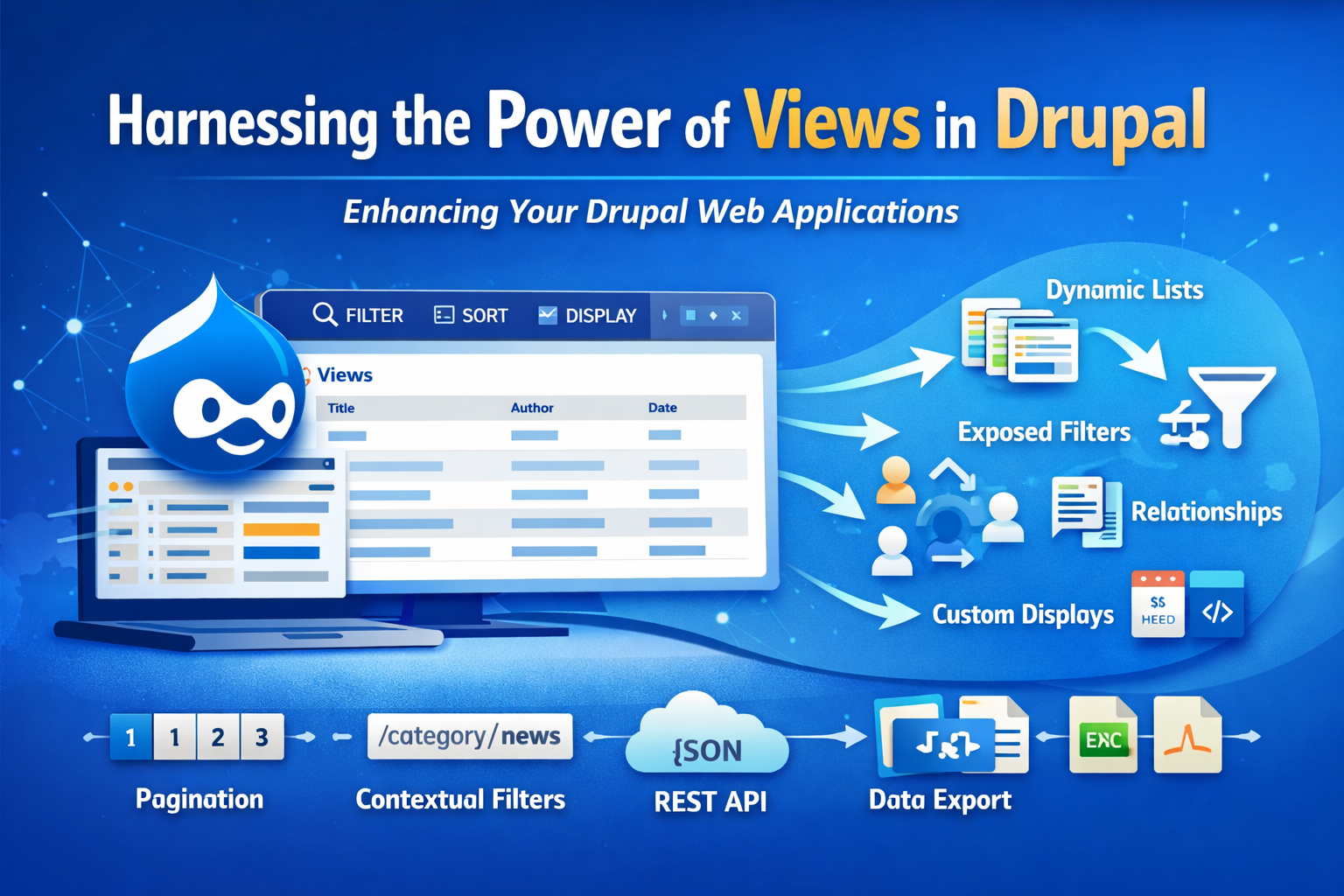
Introduction to Drupal
Drupal is a powerful open-source Content Management System (CMS) widely used for building websites, web portals, and digital experiences. It is written in PHP and supported by a strong global community. Drupal offers flexibility, scalability, and security, making it suitable for small blogs, government portals, corporate websites, and enterprise-level applications.
Key Features of Drupal
Drupal comes with a variety of built‑in features and contributed modules that enhance functionality, performance, and user experience. Below are some of its core features.
Content Authoring
Drupal provides an intuitive interface for creating, editing, and managing content. It supports custom content types, media handling, revisions, workflows, and editorial permissions.
Modular Architecture
Drupal’s modular structure allows users to enable or disable functionality through modules. Thousands of contributed modules extend capabilities such as SEO, security, user management, and e‑commerce.
Themes and Customization
Drupal allows complete control over the look and feel of a site. Various free and premium themes are available, and developers can create custom themes using Twig templating.
User Roles and Permissions
Drupal allows administrators to define multiple roles, assign permissions, and manage access control effectively, making it ideal for websites requiring complex user management.
Multilingual Support
Drupal supports native multilingual capabilities, allowing site administrators to build websites in multiple languages easily.
Security and Performance
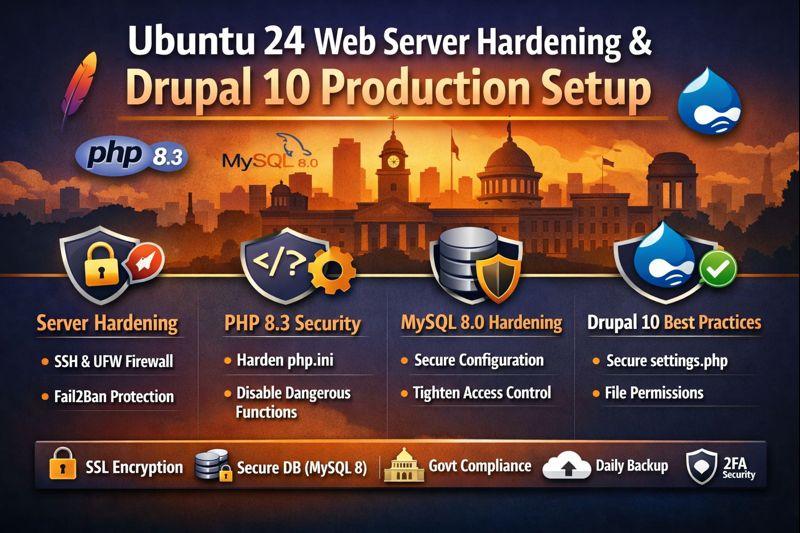
Drupal is known for its enterprise‑grade security. The Drupal Security Team actively monitors vulnerabilities and releases patches. Tools like caching, CDN integration, and performance modules help optimize speed.
Community and Ecosystem
One of Drupal’s biggest strengths is its global community. Thousands of contributors maintain modules, themes, and documentation, ensuring that Drupal remains innovative and up‑to‑date.
Conclusion
Drupal remains a trusted CMS platform due to its flexibility, scalability, and community‑driven development. It is well suited for modern digital experiences across industries.